Patellar instability

Written by Dr Sheila Strover on March 14, 2025

Patellar instability is when the kneecap does not ride smoothly throughout its excursion in the underlying groove of the femur, popping over to one side, or even de-railing. Page updated May 2024 by Dr Sheila Strover (Clinical Editor)

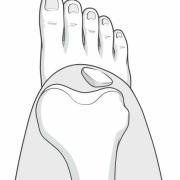
patellar subluxation

Patellar subluxation is when the patella rides up the lip of the femoral groove, but does not actually dislocate.
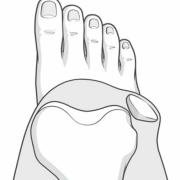
dislocation of the patella

Patellar dislocation is when the patella jumps right out of the underlying groove, creating an unsightly bulge at the front of the knee. It may reduce by itself, or the clinician may need to reduce it.

Causes of patellofemoral instability

The patella may be unstable for a number of reasons.

There may be local reasons related to the patella, such as patella alta - when the kneecap is higher than normal and may fail to engage in the underlying groove when the knee is bent, or related to the trochlear groove, such as trochlear dysplasia - when the groove in the femur underlying the patella may be shallow or malformed.

There may also be remote causes in the hip or the foot - such as rotational deformities of tibia or femur.

Peer-reviewed papers End of paper

Back to top

Trochlear dysplasia as a cause of instability

Trochlear dysplasia is also a developmental anomaly when a patient is born with the top of the femoral groove too shallow, totally flat, or very rarely even convex in shape.

This makes it difficult for the patella to easily engage, and it may sublux or even dislocate.

Back to top

Patella alta as a cause of instability

Patella alta is a developmental anomaly when a patient is simply born with the kneecap too high, so that sometimes it does not properly engage with the underlying groove when the knee is bent.

Quick links

Poor tendon alignment as a cause of instability

When the patellar tendon is tugged to one side of the knee by poor alignment of the trochlear groove and the tibial tubercle, patellar instability may result. The distance by which they are out of alignment is measured by the MRI calculation of TT-TG distance.

Quick links

Patellar tilt as a cause of instability

Patellar tilt - where the patella lists over usually to the lateral side - may lead to patellar instability.

This is usually associated with tight retinacular tissues on the same side.

Quick links

Rotational deformity of the long bones

Either or both of the long bones - tibia and femur - may have abnormal twist, which creates stress for the patella and its tendons.

If there is already another underlying issue making the patellar unstable then this will aggravate the issue. The conditions are called tibial torsion and femoral anteversion.

A combination of deformities may result in the condition known as miserable malalignment.

Quick links

Forum discussions

Back to top