After cruciate ligament reconstruction, rehabilitation begins again...
First published in 2008, and reviewed August 2023 by Dr Sheila Strover (Clinical Editor)
Cruciate ligament rehabilitation - Rehab after surgery
After cruciate ligament reconstruction, rehabilitation begins again...
First published in 2008, and reviewed August 2023 by Dr Sheila Strover (Clinical Editor)
Control of pain and swelling are the priorities immediately after surgery.
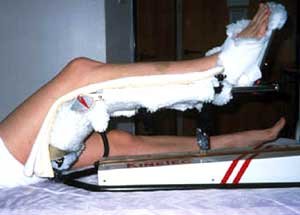
You must inform the medical/nursing staff if your pain relief is not adequate. It is important to take prescribed medication regularly to keep on top of pain, do not let it get out of control. Having said that, pain is not usually a big issue following ACL reconstruction, immediate post-operative discomfort is usually felt at the donor site more than the graft site. As we have already discussed, excessive swelling in the joint inhibits both movement and muscle activity. You should keep the leg elevated at all times when resting and may use cold therapy (ice packs or cryocuff).
Depending on the surgeon, you may use a 'CPM' (continuous passive movement) machine in the early stages. The benefit of this is that the leg is kept in elevation and the machine gently keeps the joint moving thus avoiding stiffness. Machines are very expensive and often in short supply, your outcome will not be affected if you do not use a machine, you will just have to work a little harder to get the movement on day one!
These exercises should be done regularly throughout the day - every hour if possible - little and often is best while the knee is inflamed.
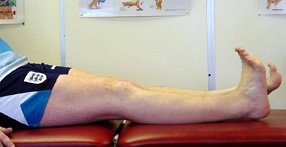
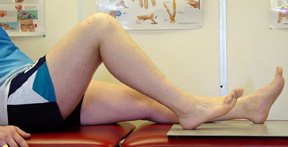
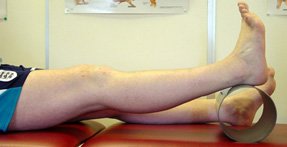
You will be allowed to walk on your leg as soon as you are over the anaesthetic and any nerve blocks have worn off, the physiotherapist will get you up for the first time and will fit you with crutches if appropriate. Some centres do not provide crutches and will get you walking on your leg straight away, others will give you crutches for a few days while you become confident. The important thing is that you must put some pressure through the leg (do not hop) but you must be safe.
Once you are up and mobile you will be able to do some simple closed chain exercises while standing. Hold a support for balance:
This video shows the exercises you can be doing within the first week after your operation. Again these exercises should be done regularly throughout the day. Exercise little and often.
As you become more confident moving around you can add to your exercises but be aware of any increase in swelling.
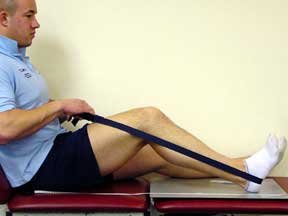
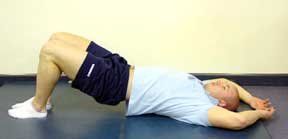
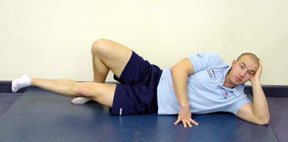
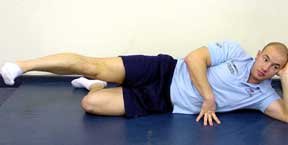
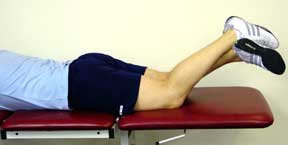
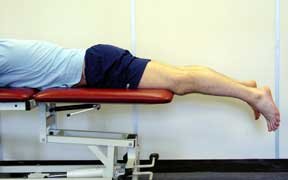
Patella Mobilisation -This is particularly important if you have had a PTG but is worth doing regardless of graft type. Your physiotherapist will show you how to do this effectively.
Sit with your leg straight out in front of you and thigh muscle relaxed; feel the kneecap (if you are relaxed it should feel loose). Now, using the fingers of each hand on either side, gently move the kneecap as far as you can from side to side. You should also try to move the kneecap up and down (use index fingers below the kneecap and thumbs above).
If you have had a PTG, the donor site will be healing with scar tissue, scar tissue has a tendency to tighten as it matures therefore it is vitally important that you keep the tendon mobile and flexible. Work on your mobilisations twice a day and continue to do so for the first few months post-operatively.
Exercise of course also mobilises the tendon and will help to stimulate the healing.
Ice - If you still have swelling once you are at home then you can apply ice packs regularly throughout the day.
Crushed ice wrapped in a damp towel is the best. If you use gel packs make sure your skin is protected, wrap these also in a damp towel. (Gel packs can be frozen to well below zero so do be careful). Leave pack in situ for 15 -20 minutes maximum and do not re-apply for at least 2 hours.
Once you have weaned off crutches (so are walking without a limp), your wounds are healed and your swelling has settled you are ready to gradually progress your exercise regime.
There are no strict time restraints here but you should progress stage by stage and only move on when confident and ready. Your physiotherapist should be guiding you through this process.
If, at any time, your knee swells, feels unstable or is painful you should see your clinician.
Aims at this stage:
NB: Some surgeons may place certain restrictions on specific activities in the early stages i.e. no running for 3mths; no open chain quads etc. Obviously you will have been made aware of these restrictions and must comply with your surgeons protocol.
Guidelines - Up to 3 months - exercises should be geared to achieving full range of movement and strengthening should be in a 'straight line' direction. Open kinetic chain exercises are OK for hip muscles and hamstrings, but stick to closed kinetic chain for the quadriceps. Some balance and co-ordination training is incorporated.
The video at the end of this section gives examples of gradually progressive activities which you can steadily work through but only move on when exercises are comfortable, controlled and providing the knee is not reacting in any way (ie. swelling or feeling unstable). You will see that you gradually increase the level of balance and co-ordination required.
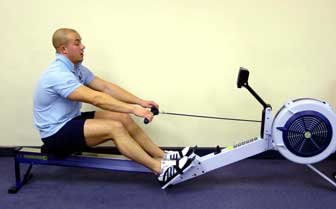
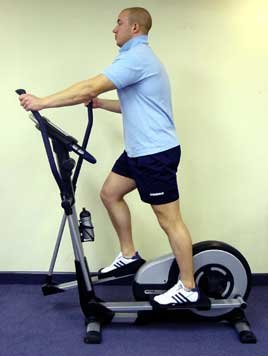
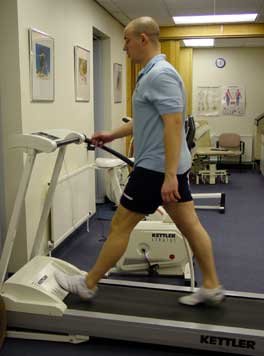
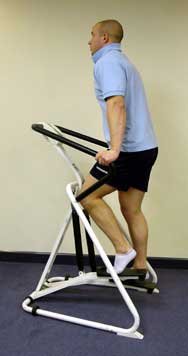
Towards the end of this phase you could also start to attend the local gym - all the aerobic equipment is closed chain in nature and therefore safe for you to use. Begin with just a few minutes on a variety of exercises rather than a prolonged time on just one piece, and gradually build up.
Weights: It is OK to use the leg press machine (low weight, lots of reps), but avoid leg extensions at this stage (they are open chain quadriceps exercises).
Hamstring curls are also important - they reinforce the action of the ACL so will give the ligament protection, and they also need additional strengthening if you have had a hamstring graft.
You will also be able to start going out on a road bike - sensible general cycling, no extreme hills or cross country at this stage.
Swimming is an unlimited activity (providing you have no discomfort) but do be careful on slippery floors and beware of children jumping in!