Current concepts and controversies 2015

strover02.png

Dr Sheila Strover

Clinical Editor

Dr Sheila Strover is the Founder and previous Clinical Editor of the KNEEguru website.Her medical studies were completed at the University of the Witwatersrand in South Africa - BSc(Hons) (1968) and MBBCh (1974). She emigrated to the United Kingdom in 1983 and worked as an anaesthetist (anaesthesio…

May 14, 2015

A brief overview of some key points made at a UK conference in 2015.

A selection of discussions at a clinical meeting of knee experts held in Worcester, UK, in May 2015.
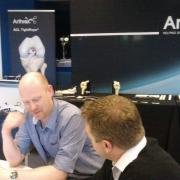
discussions after the lectures

This annual course in the UK is a favourite of mine. It is in a wonderful venue at the conference centre of Worcester Rugby Club in the UK, and combines intimacy with a great international faculty.

Duncan Learmonth, BSc FRCS - Why do ligament reconstructions fail?

  • Poor patient selection - some patients will 'hammer' their graft or not co-operate with rehab. They may be young, and if they want to return to high risk sports they need to know the risks and maybe attend a FIFA programme
  • Additional pathology, such as posterolateral corner laxity, medial collateral laxity, meniscal root injury, articular cartilage damage. Repair of a meniscal tear will hamper things because rehab needs to go slower with meniscal repair
  • Surgeon factors - tunnel position in the notch needs to be optimal
  • Graft type & thickness - autograft is best. Graft needs to be 8mm or more (but don't overstuff the notch)
  • Graft tensioning & fixation - tensioning is important (25-30 Newtons). Most modern fixation devices are acceptable, but the endobutton needs to be flush on the bone
  • ?Failure to preserve the ACL remnant - preserving the remnant may help in healing and proprioception

Charles Brown MD - Anatomic ACL reconstruction

  • The debate continues about where in the femoral footprint the graft should be placed
  • The point is that the footprint is larger than the drill hole, so it has to be decided where on the footprint one should make the tunnel
  • Surgeon technique is important as the correct use of portals and knee position optimise access to the footprint
  • Use of posts to hold the knee during surgery allow exact positioning without assistance
  • If the remnant is being preserved, it is useful to use fluoroscopy to position the tunnels as the remnant obscures the view (but too much remnant may lead to a cyclops lesion)

Konrad Slynarksi MD PhD - Current thinking of ACL reconstruction

  • Surgeons need to better understand the anatomy, especially with regard to the pivot shift and instability
  • It is important to assess in particular the anterolateral ligament (the rotational stabiliser of the knee)
  • It has become evident that the ACL remnant is important because of its nerve supply, and surgeons are using a new augmentation device of FibreTape wrapped in a porcine scaffold to help preserve the remnant
  • Technically the inside-out drilling through an accessory antero-medial portal allows correct identification of the footprint of the ACL, and preserves more bone for any future revision