Rehabilitation after a cruciate injury is a progressive process. Physiotherapist Lesley Hall explains...
First published in 2008, and reviewed August 2023 by Dr Sheila Strover (Clinical Editor)
Progressive rehab while deciding on surgery (I)
Rehabilitation after a cruciate injury is a progressive process. Physiotherapist Lesley Hall explains...
First published in 2008, and reviewed August 2023 by Dr Sheila Strover (Clinical Editor)
You should be able to complete exercises at each level without experiencing pain or instability before you move on - this is particularly important when moving from stages 3 to 4 and from 4 to 5. If you experience instability or giving way you may have tried to progress too soon.
Let's look at some examples -
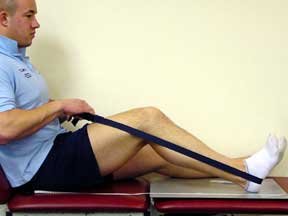
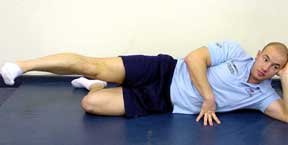
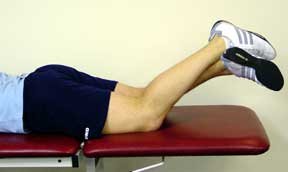
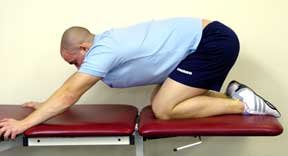
When trying to increase the bend, take the knee to its limit, feel a gentle stretch but do not force - no need to bring tears to your eyes - hold for 30 seconds and then gently release. Repeat 3 times, at least twice a day.
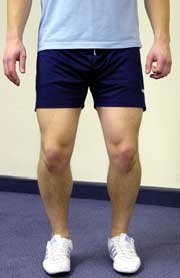
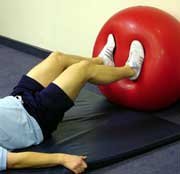
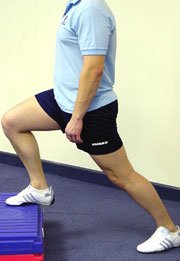
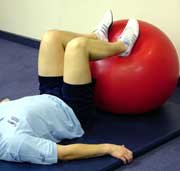
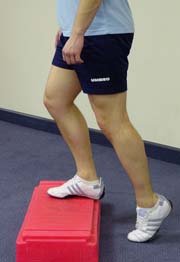
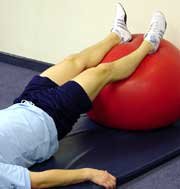
Most of these are easy to practice at home. It is better to do a few exercises regularly throughout the day, rather than try to do too many in one go - 10 minutes four or five times a day is better than 45 minutes at once, at this stage. You do not have to do all of them four or five times, just make sure you do something for increasing bend and something for strength at each session - vary the exercises and mix & match so you don-t get bored. You do not want to aggravate the knee or cause it to swell. Begin with just a few repetitions of each exercise and gradually increase, providing the knee does not react.
When you have full range of movement, can walk without a limp and are confident on stairs you can move to stage 3 which you will find in Part 7b.
