Microfracture

Written by Dr Sheila Strover on March 14, 2025

Microfracture is a surgical procedure where a tiny 'pick' is used to spike holes through damaged joint cartilage into the bone below with a view to stimulating bleeding and formation of new fibrocartilage. Page updated May 2024 by Dr Sheila Strover (Clinical Editor)

microfracture

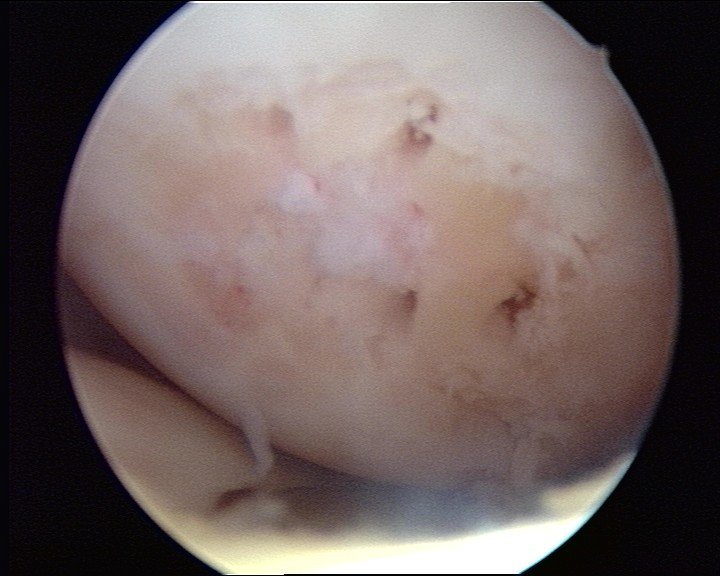
The rounded end of the femur, where the joint cartilage has worn away to show the yellowish bone. You can see the pick holes of microfracture piercing through the base plate of the cartilage.
microfracture

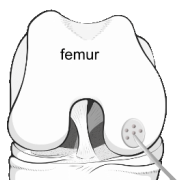
The pick has a long stem and is driven in via the keyhole by the surgeon from the outside of the joint using a small hammer.

What is the principle behind microfracture?

Microfracture allows migration of marrow cells - which have the potential to reproduce and differentiate - into the resultant clot, thus facilitating new fibrocartilage formation to cover the defect.

The procedure is losing way to nanofracture - which uses a needling device that creates narrower holes - together with augmentation with other regenerative methods such as the injection of stem cells, microfragmented fat or paste grafts.

Peer-reviewed papers End of paper Quick links

Rehabilitation after microfracture

Rehabilitation after microfracture can be a challenge. The procedure is quite painful and the joint surface has to be protected by non weight bearing until fibrocartilage covers the defect.

This means several weeks on crutches.

Peer-reviewed papers End of paper Quick links
End of links

Back to top

How effective is microfracture as a cartilage repair procedure?

Microfracture gives variable results.

Because of the long period of essential non-weight-bearing patients can get very frustrated, and accidents may happen to damage the fragile fibrocartilage.

Peer-reviewed papers End of paper Quick links

Forum discussions

Back to top