Lysis of adhesions

Written by Dr Sheila Strover on March 14, 2025

Lysis of adhesions is the surgical procedure of breaking down the strands of material which can form inside the joint if the knee has been inflamed for some time; these strands are called 'adhesions'. Page updated June 2024 by Dr Sheila Strover (Clinical Editor)

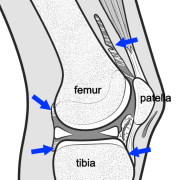
common sites for adhesions in the knee

When adhesions form, they tie down certain common areas - the suprapatellar pouch above the kneecap, the anterior interval below the fat pad in the region of the patellar tendon, and the capsular folds at the back of the knee.

In addition a cyclops lesion may form in the front part of the notch, further limiting extension.

What are adhesions?

Adhesions are initially just sticky strands, and can fairly easily be broken with stretches and mobilisation massages around the patella.

If they become more intractable, it may be possible to break them with a manipulation under anaesthesia (MUA). If the knee continues to be inflamed and the adhesions are not broken, they may become more fibrous and turn into scar tissue that can contract and pull the soft tissue areas together too firmly to be broken with manipulations. At this stage they might yet be amenable to 'lysis of adhesions', where surgical methods are employed to break down the scar tissue.

Peer-reviewed papers End of paper Quick links

Arthroscopic lysis of adhesions

There are two surgical ways to tackle adhesions.

Peer-reviewed papers End of paper Quick links

Is lysis of adhesions painful?

Pain management is very significant both during and after the surgery, as the pain after lysis of adhesions can be severe but the patient must keep complying with physiotherapy to mobilise the tissues and avoid the adhesions forming again, until the inflammatory process becomes dormant.

Peer-reviewed papers End of paper Quick links

Forum discussions

Back to top