
What causes a cyclops lesion
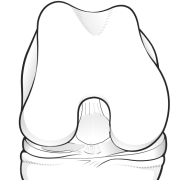
A cyclops lesion is usually associated with anterior cruciate ligament reconstruction, where the notch in the femur is struggling to accommodate the new ligament graft.
It may occur if the notch is too narrow or the graft too fat. Or the problem may be triggered by doing the ACL reconstruction too early, when there is still inflammation in the area and bone debris triggers the arthrofibrotic process.
A cyclops lesion may also occur in some knee replacements.
The bunched up tissue causes problems with achieving full extension. There may be a complete inability to achieve full extension, or it may be possible with an uncomfortable clunk.
Peer-reviewed paperQuote from peer-reviewed paper:
"....Female sex, greater graft volume, bony avulsion injuries, excessively anterior tibial tunnel, double-bundle ACLR [anterior cruciate ligament reconstruction], and bicruciate-retaining arthroplasty appear to predispose patients to cyclops lesions...."
Citation: Kambhampati SBS, Gollamudi S, Shanmugasundaram S, Josyula VVS. Cyclops Lesions of the Knee: A Narrative Review of the Literature. Orthop J Sports Med. 2020 Aug 28;8(8):2325967120945671. doi: 10.1177/2325967120945671. PMID: 32923503; PMCID: PMC7457408.
How can a surgeon prevent cyclops lesion?
As cruciate ligament reconstruction surgery has matured over the last 20 years, and the contributing factors have come to be better appreciated, ligament surgeons are mindful of the steps that can be taken to reduce the incidence of cyclops lesion, that is -
Peer-reviewed papersQuotes from a peer-reviewed paper:
"Delaying ACLR until after recovery of ROM"
"Minimally invasive surgery compared with open ACLR"
"Creating less debris by use of a sequential reamer and thorough removal of debris"
"Correct tunnel positioning"
"Debridement in and around the bone tunnel"
Citation: Kambhampati SBS, Gollamudi S, Shanmugasundaram S, Josyula VVS. Cyclops Lesions of the Knee: A Narrative Review of the Literature. Orthop J Sports Med. 2020 Aug 28;8(8):2325967120945671. doi: 10.1177/2325967120945671. PMID: 32923503; PMCID: PMC7457408.
Forum discussions
- clunking- 8 weeks post ACL reconstruction
Patients discuss their experiences with the knee 'clunking' after ACL reconstruction.