As rehabilitation progresses after a cruciate ligament injury, the focus shifts to normalising ordinary movements.
First published in 2008, and reviewed August 2023 by Dr Sheila Strover (Clinical Editor)
Progressive rehab while deciding on surgery (II)
As rehabilitation progresses after a cruciate ligament injury, the focus shifts to normalising ordinary movements.
First published in 2008, and reviewed August 2023 by Dr Sheila Strover (Clinical Editor)
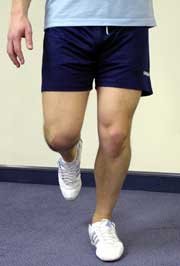
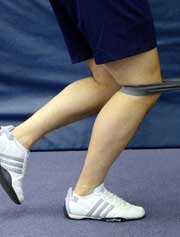
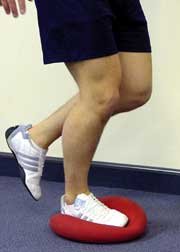
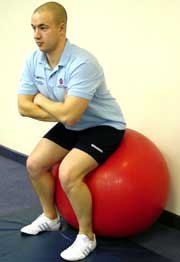
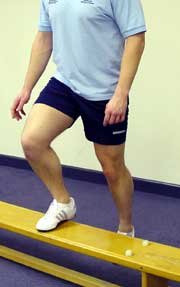
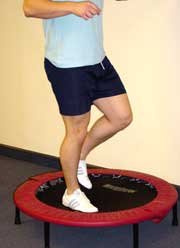
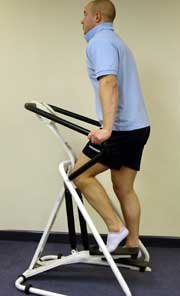
At this stage you could start to attend your local gym. The advantage of the gym is that it is a controlled environment and all exercises are 'straight line' in nature - there is no twisting or turning involved. Begin using the aerobic equipment - the static bicycle, the rower, the cross-trainer, the stepper - these are all closed chain activities and should not be a problem. Start by doing just a few minutes on a variety of different exercises rather than spending a long time on just a single piece of equipment, this way you will work more muscles in a greater variety of ways. You can also do some walking on the treadmill - gradually increase speed and distance but do not run yet.
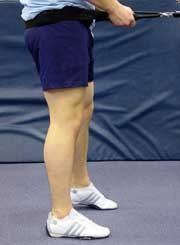
If you want to lift fixed weights then you can do hamstring curls and leg press but avoid the quads bench (leg extensions in a sitting position) - these are open chain exercises. Begin lifting low weights and doing more repetitions, rather than trying to lift maximum weight, of course you can do any upper body training you wish.
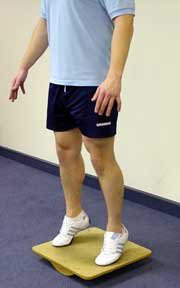
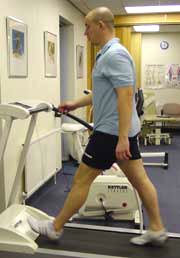
Now is the time to try some running, you must start gently and build up gradually. Begin by increasing the speed of the treadmill up to a gentle jog, just for a couple of minutes, in the middle of a brisk walk (perhaps walk for 5minutes, jog for 2 and then back down to a walk again). Providing you do not have any adverse reaction you can steadily increase the jogging time and decrease the walk. Do not increase the speed beyond a gentle jog until you are completely comfortable.
The treadmill is the ideal place to begin a running programme because the surface is obviously flat, not too hard and the environment is controlled.
You can progress to running outside when you are confident but no cross country or accompanying football yet!!
This is the final stage before you return to full sports training.
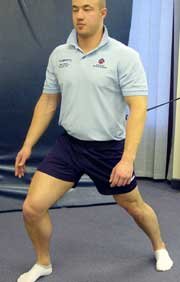
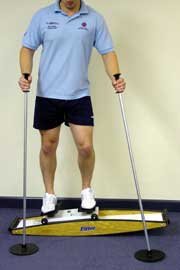
Activities must be increased to include acceleration, deceleration and cutting movements. Jumping and hopping activities, including plyometric training, can be started. It is also important that you try to simulate some of the movements involved in your own particular sport - if you play soccer you can start dribbling and passing a ball, if you are a basketball player you can start dribbling the ball, initially in a straight line and then between cones - eventually add a jump shot at the end.
If you are attending a gym you may choose to join a training class at this stage - circuit training, step aerobics etc. will all help to improve strength, agility, endurance and general fitness. Be sure that the instructor knows that you are recovering from injury and you may not complete all activities.
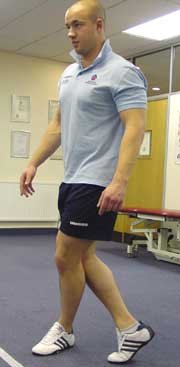
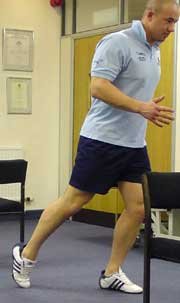
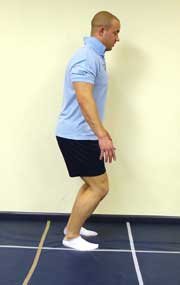
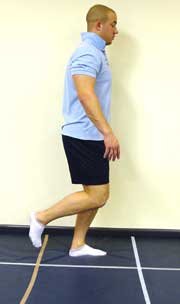
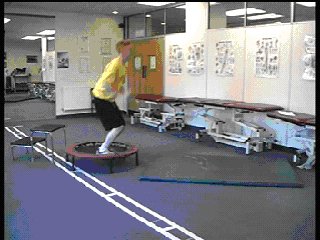
When you can successfully complete these activities without any symptoms and you feel confident that your leg is as strong as your other leg you can go back to your sports training. If you play a contact sport you will require a period of non-contact training before the contact element is added. How about trying skipping with a rope, this is easy to do at home and will also help your general fitness?
If at any time you have a period if relative inactivity such as a long vacation, then it is important for you to fully regain any loss of strength before you play competitive sport again.
Good luck, keep your leg strong and hopefully you will not have further problems.
If you have experienced episodes of instability or feelings of 'giving way' at any stage then you should go back a stage. If you find it impossible to progress because any increase in activity results in instability or giving way, you should seek further help. You may need to reconsider your expectations or consider surgery.