Posterior tibial slope

Written by Dr Sheila Strover on March 14, 2025

Posterior tibial slope exists when the top of the tibia slopes downward towards the back of the knee. A few degrees of posterior slope is normal. Page updated May 2024 by Dr Sheila Strover (Clinical Editor)

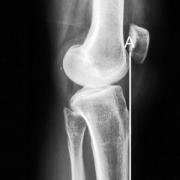
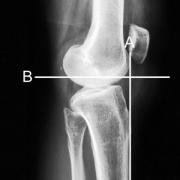
anterior tibial cortex lineperpendicular to anterior tibial cortex lineposterior tibial slope

Relevance of posterior tibial slope

The amount of tibial slope has a bearing on knee stability, and in particular the stability of the anterior cruciate ligament (ACL).

An abnormal degree of slope may make the ACL more prone to injury.

Quick links
End of links Peer-reviewed papers
  • Quote from peer-reviewed paper:

    "....Higher tibial slopes in injured soccer players compared to the uninjured players may indicate a relationship between the tibial slope and ACL injury risk....On players who display higher tibial slopes, additional exercises targeting enhancement of neuromuscular stability should be advised...."

    Citation: Senişik S, Ozgürbüz C, Ergün M, Yüksel O, Taskiran E, Işlegen C, Ertat A. Posterior tibial slope as a risk factor for anterior cruciate ligament rupture in soccer players. J Sports Sci Med. 2011 Dec 1;10(4):763-7. PMID: 24149571; PMCID: PMC3761495.

End of paper

Back to top

Measurement of posterior tibial slope

To measure the angle of tibial slope, a line is drawn on an X-ray along the front of the tibia (anterior tibial cortex line) (A).

Then a line is drawn perpendicular to the anterior tibial cortex line (B). Finally a line is drawn along the top of the tibial plateau (C), and the angle of the posterior tibial slope is the angle formed by B and C.

Back to top

Correcting tibial slope for ACL reconstruction

If the surgeon is concerned that an abnormal tibial slope might prejudice the outcome of an ACL (anterior cruciate ligament) reconstruction, then a high tibial osteotomy might be performed to correct the slope before the cruciate injury is dealt with.

Quick links